Part of the guide: Brazilian Jiu-Jitsu in Norfolk: the complete guide
BJJ has its own language and its own rules. That can feel strange at first. This guide explains your first class, your first roll and the words you will hear. It sits alongside our complete BJJ guide.
What happens in my first BJJ class?
You warm up, learn a technique and drill it with a partner. That is it for most beginners.
A class at Union Thai usually runs as warm-up and movement drills, technique of the day, positional sparring and live rolling for those who are ready. Beginners join the first parts and take their time with the rest.
What is a roll?
A roll is live sparring on the ground. You try to control your partner and they try to control you.
It is not a fight. It is a puzzle with a partner. Both people are working and both are learning. Rolling comes later, once you know the basics. You will not roll on day one.
What does it mean to tap?
Tapping means you give up. You tap your partner or the mat. Your partner lets go at once.
The tap keeps training safe. You can use it any time, for any reason. It is not a sign of weakness. Smart people tap early. They are the ones who get to train again tomorrow.
Do I need a gi?
Not for your first session. Wear shorts and a fitted t-shirt. Ask us before you buy any kit.
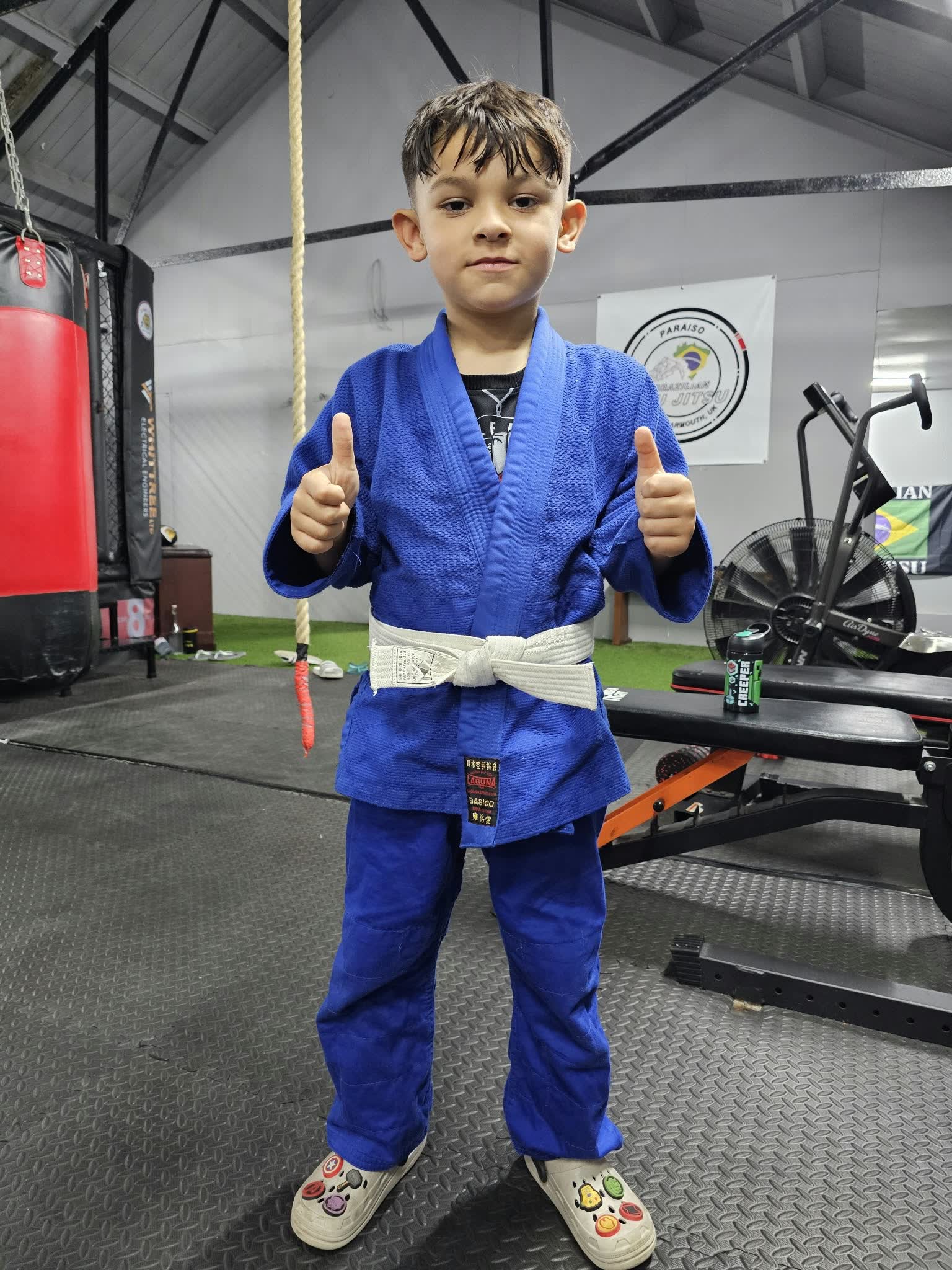
A gi is the heavy cotton jacket used in many BJJ classes. No-gi means you train in shorts and a fitted top. Both are BJJ. The jacket gives you something to grip. Without it, things move faster.
What other words will I hear?
You will hear a handful of words in your first week. Here are some of the common ones.
- Guard. A position on your back where you use your legs to control your partner.
- Submission. A choke or joint lock that makes your partner tap.
- Drill. Repeating a move with a partner to learn it.
- Escape. Getting out of a bad position.
Nobody expects you to know these words. The coaches explain as you go.
Do I need to be strong or flexible?
No. Technique beats strength. Flexibility comes with training.
Smaller people can control bigger people with leverage. That is the whole point of the art.
What is the etiquette on the mats?
Keep your kit clean, keep your nails short and take off jewellery. Be on time and look after your partner.
Tap early and let go at once when your partner taps. Thank your partner at the end. These habits keep training friendly and safe.
What if I feel out of my depth?
That is normal in BJJ. Almost everyone feels lost for the first few weeks. The art has a lot of positions and names.
Focus on one thing a class. Ask questions. Your partners have all been where you are. Progress comes from showing up.
How should I look after my body?
Warm up properly, drink water and rest between sessions. Tell the coach about any injury.
You may feel sore in new places. That is common. Light movement and a good night of sleep help. Do not train through sharp pain. Stop and tell the coach.
How do I book my first BJJ class?
Pick a BJJ session on the timetable. Pay as you go has no commitment, so it suits a first visit. See the memberships page.
Read the BJJ class page for more on what we teach.